You may also be interested in...
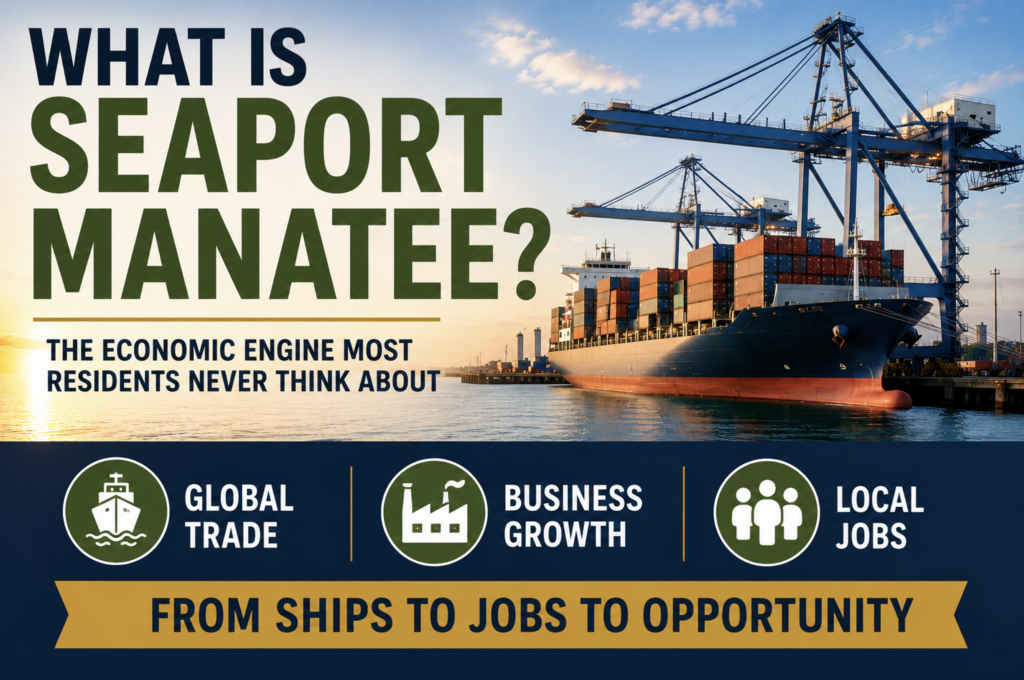
What Is Seaport Manatee and Why Does It Matter?
The Economic Opportunity Most Manatee County Residents Never Think About
Summary
Most residents know Seaport Manatee exists. They may have seen ships in the harbor, heard about the port after a hurricane, or passed signs pointing toward it while traveling through the county.
What many people do not realize is that Seaport Manatee may be one of the most important economic assets in Florida and one of the greatest opportunities for Manatee County’s future.
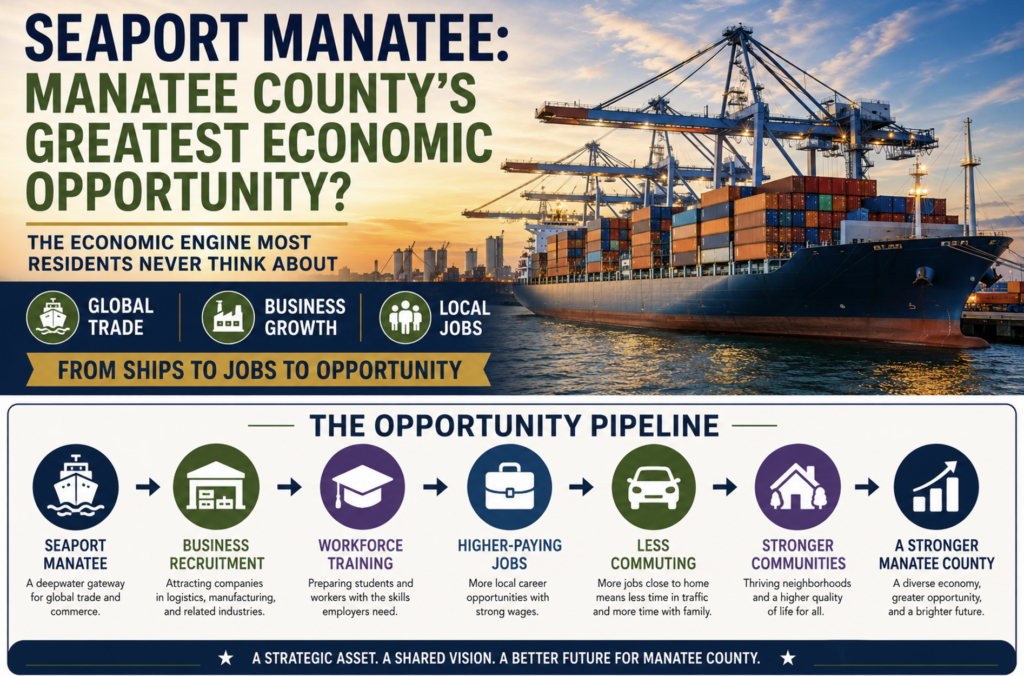
As Florida’s closest deepwater seaport to the Panama Canal, Seaport Manatee serves as a major gateway for international trade, agriculture, energy products, construction materials, manufacturing, and consumer goods. More importantly, it has the potential to help create thousands of jobs, attract new businesses, and reduce the need for residents to commute elsewhere for opportunity.
For a county that has long exported workers to neighboring communities, Seaport Manatee represents far more than a transportation facility. It represents a chance to build a stronger local economy.
More Than a Port
When most people think about ports, they think about ships. In reality, ports are economic engines.
Every ship that arrives at Seaport Manatee supports a network of businesses, warehouses, transportation companies, manufacturers, distributors, suppliers, and workers. Goods arrive from around the world before moving into Florida’s economy through trucking networks, distribution centers, retailers, and industrial users.
The port handles millions of tons of cargo annually and ranks among Florida’s leading seaports by cargo volume. It serves as a critical gateway for fuel, construction materials, agricultural products, consumer goods, and international trade.
Yet cargo is only part of the story. The larger opportunity lies in the businesses and jobs that can grow around the port.
A Strategic Advantage Few Communities Possess
Many communities would love to attract major employers, manufacturers, and logistics companies.
Few possess the assets necessary to compete. Manatee County does.
Seaport Manatee occupies approximately 1,200 acres and is surrounded by more than 5,000 additional acres positioned for logistics, manufacturing, distribution, and industrial development. That amount of available land is increasingly rare near major transportation infrastructure.
Combined with direct access to international shipping lanes, regional highways, rail connections, and one of the nation’s fastest-growing markets, the port gives Manatee County advantages that many competing regions simply do not have. For businesses evaluating where to invest, expand, or relocate, those advantages matter.
Why This Matters to Families
Economic development can sometimes feel abstract. Most residents are not thinking about cargo volumes or shipping routes when they are sitting in traffic on I-75. What they care about is opportunity.
For decades, Manatee County has had fewer local jobs than local workers. Thousands of residents commute to neighboring counties each day because higher-paying opportunities are often located elsewhere.
That reality affects families in tangible ways.
Long commutes mean less time at home. Traffic congestion continues to worsen. Economic activity occurs in neighboring counties rather than within our own community.
Creating more local employment opportunities can help change that equation. This is where Seaport Manatee becomes especially important.
From Ships to Jobs
The real value of the port is not measured by the number of ships that arrive each year. It is measured by the opportunities created around it.
Port-related growth can support:
- Logistics and transportation companies
- Manufacturing facilities
- Distribution centers
- Marine industries
- Warehousing operations
- Construction and infrastructure businesses
- Agricultural processing and export operations
These industries often provide career paths that extend well beyond entry-level employment. They create opportunities for skilled trades, technicians, engineers, managers, information technology professionals, supply chain specialists, and many other occupations. The result is a broader and more diversified local economy.
Preparing for the Next Wave of Jobs
Attracting businesses is only half the challenge. The community must also ensure that local residents are prepared to fill the jobs those businesses create. This is why economic development and workforce development must work together.
While promoting Manatee County’s advantages to businesses around the country, Mark is also encouraging local schools, colleges, workforce organizations, and training providers to think ahead about the skills employers will need in the coming years.
Having spent decades building and leading technology companies, Mark has seen firsthand how quickly workforce needs can change. His experience in business development, technology, and innovation has reinforced the importance of aligning education and training programs with emerging industry demands.
That perspective shapes his belief that economic development should not stop with recruiting employers. Communities must also prepare students and workers to take advantage of the opportunities those employers create.
Industries connected to port growth may require:
- Logistics professionals
- Manufacturing technicians
- Skilled tradespeople
- Supply chain specialists
- Engineers
- Maritime workers
- Information technology professionals
- Equipment operators
Preparing students for these careers today can help ensure that future opportunities benefit local residents rather than forcing employers to recruit talent from outside the region. A strong workforce is often one of the first things businesses evaluate when deciding where to invest.
What Could Seaport Manatee Become?
The most exciting aspect of Seaport Manatee may be its future potential.
The port’s long-term Master Plan envisions substantial growth over the coming decades, including expanded cargo capacity, additional business investment, and continued development of port-related industries. The approved Master Development Plan provides a framework for growth through 2042 while helping qualified projects move through an expedited development process.
Container traffic is projected to grow significantly. Distribution and logistics operations are expected to expand. Additional industrial investment could create new opportunities for both businesses and workers.
Seaport Manatee will never be the largest port in America. It doesn’t need to be. Its opportunity lies in becoming the premier logistics, manufacturing, and distribution gateway for one of the fastest-growing regions in the country.
Looking Ahead
Seaport Manatee is not valuable simply because ships arrive there. It is valuable because of the opportunities it can create for workers, businesses, students, and future generations.
Success should not be measured solely by cargo volumes or development projects. The true measure of success is whether more residents can build careers closer to home, whether young people can find opportunity without leaving the community they love, and whether families can enjoy a higher quality of life because stronger economic opportunities exist right here in Manatee County.
If developed thoughtfully, Seaport Manatee can help reduce labor export, strengthen workforce development, diversify the local economy, and create opportunities that benefit residents for decades to come. That is why Seaport Manatee matters.
Key Takeaways
- Seaport Manatee is one of Florida’s most important deepwater ports.
- The port serves as a major gateway for international trade and commerce.
- More than 5,000 acres of surrounding land provide exceptional growth potential.
- Port-related industries can support higher-paying jobs and economic diversification.
- Workforce development is essential to ensuring local residents benefit from future growth.
- Strategic investment in the port can help create opportunities closer to home and strengthen the local economy.
Frequently Asked Questions
What is Seaport Manatee?
Seaport Manatee is a deepwater seaport located at the entrance to Tampa Bay in Manatee County. It serves as a major gateway for international trade, handling everything from construction materials and fuel to agricultural products, consumer goods, and containerized cargo.
Why is Seaport Manatee important to Manatee County?
The port supports economic activity throughout the region by facilitating trade, attracting business investment, and supporting jobs. Beyond its direct operations, Seaport Manatee can help create opportunities in logistics, manufacturing, distribution, transportation, and other industries that strengthen the local economy.
Does the port create jobs beyond shipping?
Yes. While many people associate the port with ships and cargo, port-related economic activity supports a wide range of careers, including logistics, warehousing, manufacturing, engineering, construction, supply chain management, information technology, skilled trades, and business operations.
How can Seaport Manatee help reduce commuting?
Many Manatee County residents currently commute to neighboring counties for higher-paying employment opportunities. As businesses expand around the port and related industries grow, more residents may be able to find career opportunities closer to home, reducing commute times and strengthening the local economy.
What industries are most likely to grow around the port?
Industries that benefit from transportation access and global trade are often attracted to port regions. These can include logistics, manufacturing, warehousing, distribution, cold storage, marine services, construction materials, agricultural processing, and supply chain operations.
What is the Master Development Plan?
The Master Development Plan is a long-term framework approved through 2042 that helps guide future development within the port area. It provides a streamlined process for qualifying projects and is designed to support continued economic growth, investment, and job creation.
Why is workforce development part of the conversation?
Attracting businesses is only part of economic development. Local residents must also have the skills needed to fill the jobs those businesses create. That’s why workforce training, career education, technical certifications, and partnerships between schools and employers are critical to maximizing the benefits of future growth.
How are local schools connected to Seaport Manatee’s future?
Many of the industries expected to grow around the port will require skilled workers in areas such as logistics, manufacturing, engineering, information technology, supply chain management, and the skilled trades. Preparing students for these careers today can help ensure that future opportunities benefit local residents.
Is Seaport Manatee trying to become one of the largest ports in the country?
No. The port’s opportunity is not to compete with massive ports such as Los Angeles or New York. Instead, its strength lies in serving as a strategic regional gateway for one of the fastest-growing areas in the country while supporting business growth and job creation throughout Central and Southwest Florida.
Why should the average resident care about Seaport Manatee?
Because the port is about more than cargo. It represents an opportunity to create jobs closer to home, strengthen the local economy, expand career opportunities for future generations, and reduce the need for thousands of residents to leave the county each day in search of work.
Related Articles
Is Manatee County a Net Exporter of Labor?
Learn why thousands of residents leave the county each day for work and how creating more local job opportunities can strengthen families, reduce traffic, and improve quality of life.
Are Manatee County Residents Really Getting Ahead?
Explore the relationship between income growth, rising costs, and why many residents still feel financially squeezed despite positive economic indicators.
Why Housing Feels Unaffordable in Manatee County
Understand how wages, housing costs, and economic opportunity are interconnected and why local job growth matters to affordability.
The Future of Farming in Manatee County
See how innovation, workforce development, and economic opportunity can help keep agriculture viable for future generations.
Stay Connected
The future of Manatee County will not be shaped by any single project, industry, or policy. It will be shaped by how well we connect economic opportunity, workforce development, infrastructure, housing, education, and quality of life.
If you found this article helpful, I invite you to follow my Facebook page for new articles, community discussions, research, and ideas focused on building a stronger future for Manatee County.
Together, we can create more opportunities closer to home while preparing the next generation for success.